Alcohol Rehab Centers Near You
Compare alcohol rehab centers and treatment options for alcohol use disorder (AUD). Start with the treatment function you need, including medical detox, residential care, outpatient treatment, or medication support, then browse city and state directories to compare providers.
Confidential · No cost to call · City & state directories available
Compare alcohol treatment options
Alcohol treatment can involve more than one service over time. Compare the main treatment pathways below, then use the location finder to review treatment options near you.
Medical Detox
Compare supervised alcohol withdrawal management and ask how ongoing AUD treatment begins after stabilization.
Residential Treatment
Compare live-in addiction programs when more structure, monitoring, or separation from the current environment may be appropriate.
Outpatient Treatment
Compare outpatient care, IOP, PHP, therapy, and continuing support for people who can safely live outside a residential program.
Medication Treatment
Learn how naltrexone, acamprosate, and disulfiram may fit into alcohol use disorder treatment across different levels of care.
Find alcohol rehab by city or state
Start with a published location page, then compare providers by detox capability, residential or outpatient care, medication services, mental health support, insurance, and continuing-care planning.
What is alcohol rehab?
Alcohol rehab is clinical treatment for alcohol use disorder (AUD), a chronic medical condition marked by difficulty controlling drinking despite negative consequences. Treatment is not one-size-fits-all. The right level of care depends on drinking pattern, withdrawal history, physical health, mental health needs, and home environment.
Some people begin with medical detox because alcohol withdrawal can be medically serious. Others start at residential, PHP, IOP, or outpatient care if detox is not clinically indicated. A clinical assessment at intake helps determine where to begin and what medications or therapy approaches are recommended.
- Alcohol detox may be needed before residential or outpatient treatment begins
- FDA-approved medications (naltrexone, acamprosate, disulfiram) can reduce cravings and support sobriety
- Residential treatment provides live-in structure when outpatient care is not enough
- Dual-diagnosis care is recommended when anxiety, depression, trauma, or other conditions co-occur with AUD

Understanding AUD severity levels
Alcohol use disorder is diagnosed across three severity levels based on the number of diagnostic criteria present. Severity is one part of treatment planning, but it does not by itself determine whether someone needs detox, residential care, PHP, IOP, or standard outpatient treatment. Withdrawal history, medical and psychiatric needs, prior treatment, home stability, and current risk also matter.
Mild AUD
2–3 diagnostic criteria present
People with mild AUD may benefit from outpatient treatment, brief interventions, and FDA-approved medications. They may not need residential care or detox, but clinical evaluation is important to rule out withdrawal risk.
- Outpatient therapy or IOP may be appropriate
- Naltrexone or acamprosate may be prescribed by a primary care provider or psychiatrist
- Motivational interviewing and CBT are commonly used
- Ask a provider whether detox evaluation is needed even for mild AUD
Moderate AUD
4–5 diagnostic criteria present
Moderate AUD may call for more treatment structure, but the setting should follow an individual assessment rather than the symptom count alone. Withdrawal risk, prior treatment, home support, medical needs, and co-occurring mental health conditions can change the starting level of care.
- Ask whether alcohol withdrawal risk needs a separate detox assessment
- Compare PHP, IOP, or standard outpatient care when living outside treatment is clinically appropriate
- Consider residential treatment when more structure or separation from the current environment is needed
- Ask how medication and mental health care are coordinated with the chosen level of care
Severe AUD
6 or more diagnostic criteria present
Severe AUD can be associated with substantial withdrawal and relapse risk, but the number of AUD criteria does not predict withdrawal severity by itself. A clinical assessment should review drinking pattern, prior withdrawal, seizures or delirium, medical illness, sedative use, psychiatric stability, and the recovery environment.
- Do not assume symptom count alone determines whether inpatient detox is required
- Compare residential or intensive outpatient care according to medical stability and recovery environment
- Ask whether medication for AUD is appropriate during continuing treatment
- Build continuing-care plans around relapse risk, mental health needs, housing, and treatment engagement

Alcohol detox: what to know
Alcohol withdrawal can be life-threatening. Seizures and delirium tremens (DTs) can occur in people with heavy, long-term alcohol use. Do not attempt unsupervised withdrawal from heavy daily drinking. Call 911 for any seizure activity, extreme confusion, hallucinations, or high fever during withdrawal.
Unlike opioid withdrawal, alcohol withdrawal can be fatal in severe cases. Heavy, long-term drinkers are at risk for serious complications including grand mal seizures and delirium tremens, a syndrome involving severe agitation, confusion, fever, and cardiovascular instability that requires emergency medical care.
Medical alcohol detox uses clinically supervised protocols, typically including benzodiazepines (like diazepam or lorazepam) or phenobarbital, to manage withdrawal safely. The goal is stabilization before ongoing treatment. Detox alone does not address the underlying alcohol use disorder.
- Ask whether detox is on site and medically supervised 24 hours a day
- Ask what medications are used. Benzodiazepines are a central evidence-based treatment for clinically significant alcohol withdrawal, while some experienced settings use phenobarbital in selected protocols
- Ask what the plan is after detox. Detox alone is not treatment for AUD
- Ask whether alcohol medications (naltrexone, acamprosate) are started during or after detox
Alcohol withdrawal: a general timeline
Alcohol withdrawal timing varies by drinking pattern, history, and individual biology. Heavy daily drinkers are at greatest risk. This is a general reference. A clinical evaluation should guide any decisions about detox.
Early onset
Anxiety, tremor, sweating, nausea, elevated heart rate, and insomnia typically begin within 6–12 hours of the last drink. Minor withdrawal may resolve at this stage, or it may progress further in heavy drinkers.
Seizure risk
Alcohol withdrawal seizures most commonly occur in this window. Grand mal seizures can happen even in people with no prior seizure history. This phase requires medical supervision for anyone with heavy daily use or prior withdrawal complications.
Peak & DTs
Delirium tremens (DTs), marked by severe confusion, hallucinations, fever, and cardiovascular instability, typically peaks between 48 and 72 hours. DTs require emergency medical care and can be fatal without intervention. Call 911 immediately if DT symptoms occur.
Stabilization
Most acute physical symptoms resolve within a week. Sleep disruption, anxiety, and mood changes may persist for weeks. Post-acute withdrawal syndrome (PAWS) can include cravings and mood instability for months, which makes ongoing treatment important.
Medications for alcohol use disorder
Naltrexone, acamprosate, and disulfiram are FDA-approved for alcohol use disorder. Medication can be used alongside behavioral treatment and can continue across different levels of care when clinically appropriate.
Ask how medication fits into the treatment plan
Medication is one evidence-based option for alcohol use disorder, but the choice depends on clinical history, treatment goals, contraindications, adherence considerations, and patient preference. Ask which medications the program can prescribe or coordinate, who manages them, and whether treatment can continue after discharge.
Naltrexone
(ReVia, Vivitrol)
Opioid antagonist that reduces cravings and the reward from alcohol
- Reduces the pleasurable effects of alcohol and decreases craving intensity
- Available as a daily oral tablet (ReVia) or once-monthly injection (Vivitrol)
- Oral and extended-release injectable formulations allow different approaches to adherence and follow-up
- Vivitrol injection removes the daily adherence decision, which can help people who have difficulty with daily pills
- Should not be used by people currently taking opioids or with acute liver failure
- Ask whether the program prescribes naltrexone and which formulation they recommend
Acamprosate
(Campral)
Medication used to help maintain abstinence after alcohol cessation
- Used to support abstinence in people who have stopped drinking
- It does not treat acute alcohol withdrawal and is generally considered after withdrawal stabilization
- It does not cause an aversive alcohol reaction
- It is taken on a regular schedule, so adherence and follow-up matter
- Renal function is important when clinicians decide whether acamprosate is appropriate
- Ask whether the program can start or continue acamprosate when it fits the treatment plan
Disulfiram
(Antabuse)
Aversive agent that causes an unpleasant reaction when alcohol is consumed
- Causes flushing, nausea, vomiting, and heart palpitations if alcohol is consumed while taking it
- Works as a deterrent. The person must choose daily not to drink while taking the medication
- Most effective with strong motivation and external support (e.g., supervised administration)
- Not suitable for people with heart disease, psychosis, or who are still actively drinking
- Requires a waiting period after the last drink before starting, typically 12 hours
- Ask whether supervised administration or witnessed daily dosing is part of the program
Alcohol rehab levels of care
Alcohol rehab is not a single setting. The right level of care depends on withdrawal risk, prior treatment history, co-occurring conditions, and home stability.
Medical Detox
Supervised withdrawal management for alcohol dependence. Clinical protocols are designed to reduce withdrawal severity and serious complications. Detox alone is not treatment for AUD. Ask what happens after stabilization and whether continuing treatment begins immediately.

Residential Treatment
Live-in treatment with 24-hour structure, therapy, peer support, and clinical oversight. Residential care may fit when more structure is needed or the current environment makes outpatient recovery difficult. Ask whether medication treatment is available or coordinated.

PHP Programs
Partial hospitalization provides intensive daily treatment (typically 5–6 hours/day) while the person lives off site. PHP is a common step-down from residential care and may include medication management, group therapy, and individual counseling.
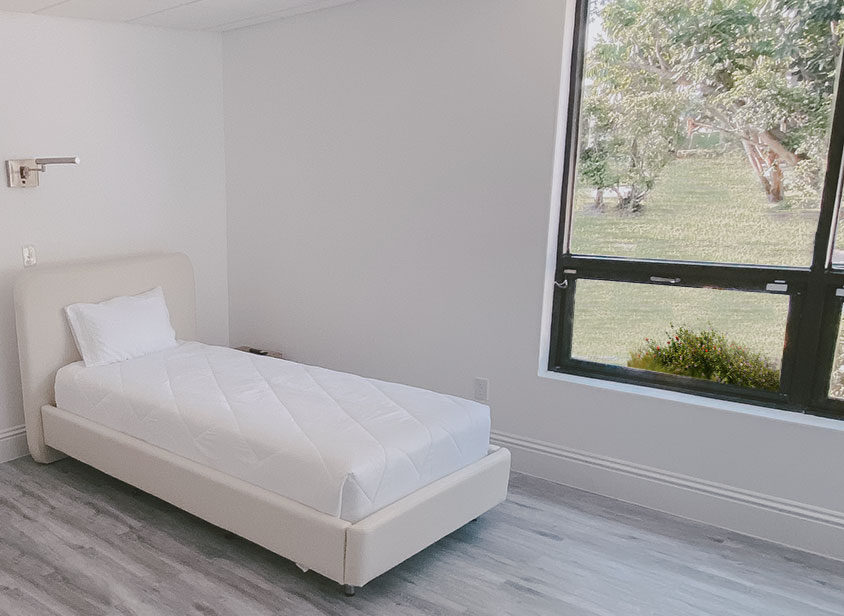
IOP Programs
Intensive outpatient programs provide structured treatment while the person continues living at home or in another community setting. Schedules and medication services vary by program.

Outpatient & Medication
Standard outpatient care can combine therapy, follow-up, and medication management while the person lives outside the program. Clinical fit depends on withdrawal risk, psychiatric and medical needs, home stability, and ability to participate consistently.

Dual Diagnosis
Many people with AUD also have anxiety, depression, PTSD, or trauma. Dual-diagnosis treatment addresses both conditions simultaneously. Ask how mental health care is integrated. Separate treatment tracks and fully integrated care can produce different outcomes.
Inpatient vs. outpatient alcohol rehab
The main difference is the amount of structure, supervision, and time spent in treatment each week. Neither is universally better. The right choice depends on clinical need.
Inpatient / Residential
Live-in structured environment with 24-hour support
- Live at the facility for the duration of treatment (typically 28–90 days)
- 24-hour clinical oversight, which is useful after medically complex detox
- Structured daily schedule of therapy, groups, and activities
- Physical separation from people, places, and triggers associated with drinking
- Recommended when prior outpatient attempts have not been sufficient
- Ask whether FDA-approved medications are offered within the residential program
Outpatient (PHP / IOP / OP)
Scheduled treatment while living at home or in supportive housing
- Live at home, in sober housing, or with family while attending scheduled sessions
- PHP: typically 5–6 hours per day, 5 days/week, for high-intensity outpatient care
- IOP: typically 3 hours per day, 3–5 days/week, for moderate-intensity care
- Allows maintenance of work, school, and family responsibilities
- Best suited for stable home environment with strong support and motivation
- Can be combined with naltrexone or acamprosate prescribed by a provider
Common therapy approaches in alcohol rehab
Medication addresses the biological aspects of AUD. Therapy addresses behavioral patterns, triggers, social pressure, trauma, and long-term recovery skills. Combined treatment produces better outcomes than either alone.
Cognitive Behavioral Therapy (CBT)
Identifies thought patterns and high-risk situations that contribute to alcohol use. CBT builds relapse-prevention skills, refusal skills, and coping strategies for stress and cravings. These skills carry into daily life after treatment ends.
Motivational Enhancement
A short-term, evidence-based approach that helps people clarify their own values and reasons for change. Particularly effective in early treatment when ambivalence is common. Often used during intake assessments and the first phases of treatment.
12-Step Facilitation
Structured introduction to Alcoholics Anonymous and the 12-step framework. Helps people connect with peer recovery communities, find a sponsor, and build a support network. Long-term AA participation is associated with improved sobriety outcomes.
Family Therapy
Alcohol use disorder affects entire families. Family therapy improves communication, establishes healthy boundaries, and prepares loved ones to be a source of support rather than an inadvertent trigger. Ask whether family involvement is part of the program.
Trauma-Informed Care
Trauma and adverse childhood experiences are common co-factors in AUD. Trauma-informed programs recognize this and integrate PTSD-aware approaches into alcohol rehab rather than treating them as separate issues with separate providers.
Relapse Prevention Planning
Structured planning for high-risk situations, urge management, social pressure, and what to do if a lapse occurs. Relapse prevention is typically addressed across all levels of care. Ask what discharge planning looks like and how aftercare is coordinated.
What alcohol rehab looks like step by step
Alcohol treatment typically moves through several phases. Understanding the sequence helps people know what to expect before their first call or intake appointment.
Assessment
Clinical intake evaluates drinking history, withdrawal risk, mental health, home stability, insurance, and care preferences. This determines whether detox is needed and which level of care is appropriate. A good assessment asks about prior treatment attempts.
Detox / Stabilization
If clinically indicated, medical detox manages alcohol withdrawal safely. Medication may be initiated during detox to reduce post-acute cravings. Not everyone needs formal detox. The clinical assessment determines this.
Active Treatment
Residential, PHP, or IOP provides structured therapy, group sessions, medication management, and relapse-prevention skills. Dual-diagnosis mental health care is addressed concurrently. Length varies based on clinical need and progress.
Continuing Care
Aftercare includes ongoing medication support (naltrexone or acamprosate), outpatient therapy, alumni programs, sober living, AA, SMART Recovery, and relapse-prevention planning. Ask every program how discharge and continuing care are handled.
Alcohol use disorder and co-occurring conditions
Alcohol use disorder frequently co-occurs with anxiety disorders, depression, PTSD, bipolar disorder, and other mental health conditions. In some cases, alcohol is used to self-medicate these symptoms, which can worsen both conditions over time.
Dual-diagnosis treatment addresses AUD and mental health conditions simultaneously. Programs that treat them separately, or ignore one entirely, produce worse outcomes. When searching for alcohol rehab, ask specifically how co-occurring conditions are assessed and treated.
- Ask whether a psychiatric evaluation is part of the initial assessment
- Ask how mental health treatment is integrated, including separate tracks or concurrent care
- Ask whether trauma-informed approaches are used if trauma history is present
- Ask whether medication management for mental health conditions is available within the program

Looking for alcohol rehab for someone else?
Many alcohol rehab searches start with a spouse, parent, sibling, or adult child. It is common to feel overwhelmed, unsure about what to say, or worried about how to start the conversation.
Use this directory to understand alcohol treatment options before making any calls. Knowing what detox involves, what FDA-approved medications are available, and what questions to ask admissions teams can help you feel more prepared before the conversation begins.
- A family member can call an admissions team first to ask questions before the person seeks help
- Ask whether the program offers family therapy or family education programming
- Ask what happens if detox is needed and whether the rehab coordinates with a detox facility
- Ask how discharge planning, relapse prevention, and aftercare are handled
Alcohol rehab questions
Common questions about alcohol withdrawal, detox safety, FDA-approved medications, inpatient vs. outpatient care, and how to start the search for a program.
“Alcohol withdrawal can be medically serious. If you or a loved one drinks heavily every day, do not attempt to stop without speaking to a medical provider first.”
Yes. Alcohol withdrawal can be life-threatening for people who drink heavily every day. Grand mal seizures can occur within 12–48 hours of the last drink. Delirium tremens (DTs), which can include severe confusion, hallucinations, fever, and cardiovascular instability, typically appears at 48–72 hours and requires emergency medical care. Do not attempt unsupervised withdrawal from heavy daily alcohol use. A clinical evaluation is the right first step.
Not everyone needs formal medical detox before entering alcohol rehab. Detox is most important for people who drink heavily daily, have a history of alcohol withdrawal seizures, have prior DTs, or have underlying medical conditions. A clinical intake assessment will evaluate your withdrawal risk. If in doubt, ask whether a detox evaluation is part of the admissions process. It should be.
Three FDA-approved medications treat alcohol use disorder: naltrexone (reduces cravings and the rewarding effect of alcohol), acamprosate (reduces post-acute withdrawal discomfort and anxiety), and disulfiram (causes aversive reactions to alcohol as a deterrent). During detox, benzodiazepines or phenobarbital manage withdrawal symptoms. Ask any alcohol rehab program which medications they use and whether they are included in the program or require a separate prescription.
Alcohol detox typically lasts 5–10 days depending on severity. Residential treatment programs commonly run 28–90 days. PHP and IOP may follow for weeks to months. Outpatient care and medication support for AUD are often continued long-term. Naltrexone and acamprosate are safe for extended use. The right length depends on clinical progress, not a fixed calendar.
Yes. Outpatient care (PHP, IOP, or standard outpatient) is appropriate for many people with alcohol use disorder, particularly those with mild to moderate AUD, stable housing, strong social support, and no complex medical needs. Residential care is more appropriate when prior outpatient attempts have not worked, when the home environment is high-risk, or when a co-occurring mental health condition requires more intensive support.
Most private insurance, Medicaid, and Medicare plans cover alcohol use disorder treatment, including detox, residential, PHP, IOP, and outpatient care, under federal mental health parity laws. Coverage details vary by plan. Deductibles, out-of-pocket maximums, and prior authorization requirements differ. Always confirm coverage directly with your insurance provider and with the rehab facility’s billing team before admission.
Alcohol detox is medical stabilization, the process of safely managing withdrawal symptoms so the body can clear alcohol. It typically lasts 5–10 days. Alcohol rehab is the broader treatment that follows: residential care, PHP, IOP, therapy, medication support, relapse-prevention planning, and aftercare. Detox without ongoing rehab has poor long-term outcomes. The two work together, not as alternatives.
Ask whether a clinical detox evaluation is part of admissions. Ask which FDA-approved medications for AUD are offered. Ask how mental health or dual-diagnosis conditions are addressed. Ask what the daily structure looks like. Ask about aftercare planning and what happens after the first phase of treatment. Ask about insurance, cost, and availability. Ask whether family involvement is offered.
No. This is an informational directory. It does not diagnose conditions, recommend specific programs, or replace a clinical evaluation. For a withdrawal emergency, call 911 immediately. For a clinical assessment, contact a licensed addiction medicine provider, detox facility, or hospital emergency room directly.
Alcohol treatment guides and related care
Use these guides when a treatment decision depends on withdrawal safety, medication, what follows detox, or co-occurring mental health needs.
Find alcohol rehab near you
Start with a city or state directory, then compare detox, residential, outpatient, medication, mental health, insurance, and continuing-care options before contacting a provider.