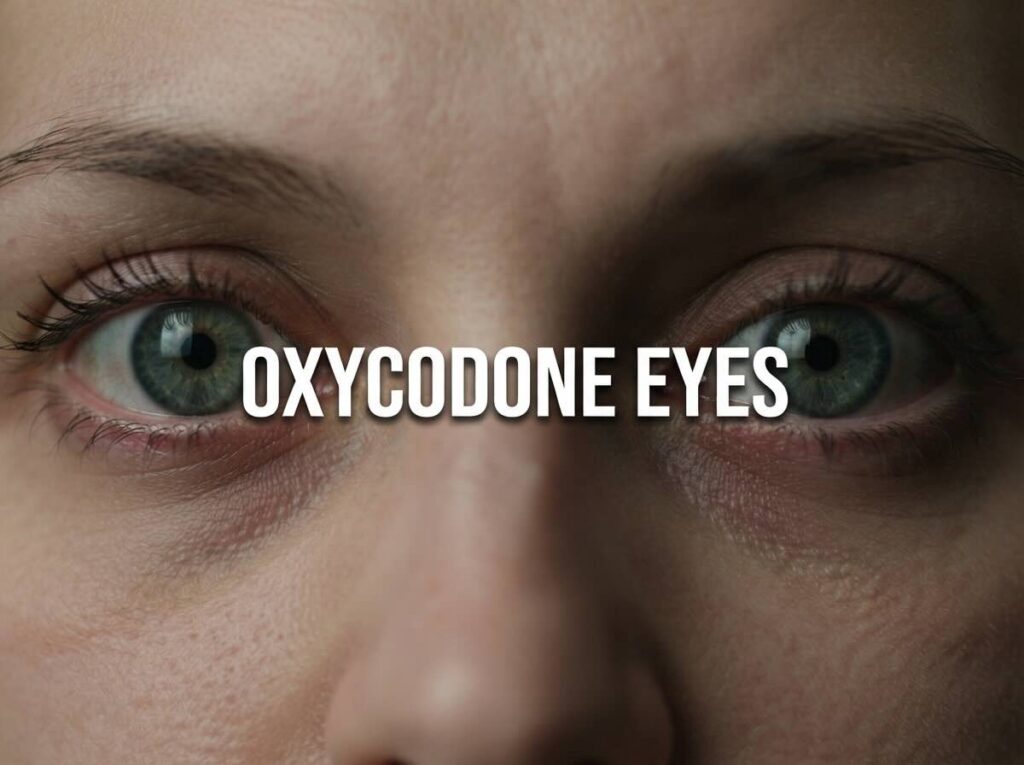
Oxycodone can make the pupils small and constricted, often described as pinpoint pupils. Current oxycodone-acetaminophen labeling also lists miosis, visual disturbances and red eye among reported ocular effects. For families and people using opioids, the eyes can be one visible clue, but pupil appearance cannot identify oxycodone by itself.
The most important context is the full pattern: pinpoint pupils plus nodding, slowed speech, severe sleepiness or slowed breathing is much more concerning than small pupils alone.
Oxycodone Eyes at a Glance
| Classic opioid pupil effect | Miosis, or small constricted pupils |
| Street description | Pinpoint pupils |
| Other reported eye effects | Visual disturbances and red eye |
| During withdrawal | Pupils can become dilated |
| Can eyes identify oxycodone? | No. Lighting, other drugs and medical conditions can also change pupil size |
| Overdose context | Pinpoint pupils with inability to wake and slow breathing is a major opioid-overdose pattern |
Why Oxycodone Causes Pinpoint Pupils
Opioids alter autonomic control of the pupil. During opioid intoxication, the balance of nerve signals favors constriction, producing miosis.
The effect can be striking in heavy intoxication, where the pupils appear much smaller than expected for the lighting conditions.
Current Percocet labeling lists miosis among ocular adverse effects, and opioid-overdose guidance commonly includes pinpoint pupils in the overdose pattern.
The pupil effect reflects opioid receptor activity and is not unique to oxycodone.
What Do Pinpoint Pupils Look Like?
Pinpoint pupils are unusually small pupils that remain constricted even when a person might otherwise be expected to have larger pupils.
In opioid intoxication, both pupils are often small. The person may also look sleepy, have heavy eyelids and respond slowly.
Lighting still matters. Bright light naturally constricts pupils, and some medications or neurologic conditions can also cause miosis.
The eyes become more useful as a clue when they are interpreted with known opioid use and other signs of central nervous system depression.
Oxycodone Eyes During Nodding
Someone who is nodding may have small pupils, drooping eyelids and difficulty keeping the eyes open. Their gaze can drift as they fall asleep and briefly wake again.
Nodding reflects substantial opioid sedation. It can look familiar to a long-term user and still be medically risky.
If the person becomes difficult to wake or breathing slows, the situation has moved beyond an eye sign into a possible overdose emergency.
See Oxycodone Overdose for the full breathing and consciousness pattern.
Can Oxycodone Cause Red Eyes?
Current oxycodone labeling describes peripheral vasodilation and histamine-related effects that can include red eyes, flushing and itching.
Redness is much less specific than miosis. Dryness, allergies, cannabis, lack of sleep, irritation and many other conditions can make the eyes red.
A red eye therefore adds little by itself to pill identification.
When redness occurs with heavy sedation, itching, flushing and known oxycodone use, it can fit the broader opioid effect.
Can Oxycodone Blur Vision?
Visual disturbances are listed among reported ocular effects in oxycodone-acetaminophen labeling.
Blurred or unstable vision can also come from sedation, poor focus, dizziness or combinations with other central nervous system depressants.
Sudden severe vision loss, a painful eye, one-sided pupil changes or new neurologic symptoms should be evaluated urgently because those findings can indicate another medical problem.
Ordinary opioid miosis should never be used to explain away a major new visual symptom.
What Happens to the Pupils During Oxycodone Withdrawal?
Withdrawal often produces the opposite autonomic pattern from intoxication. Pupils can become dilated as opioid receptor stimulation falls.
Watery eyes, runny nose, yawning, sweating, restlessness and insomnia can appear at the same time.
Someone who alternates between small pupils after using and larger pupils while sick between doses may be moving through repeated intoxication and withdrawal cycles.
See Oxycodone Withdrawal for the full symptom timeline.
Can You Tell M30 Use From the Eyes?
No eye appearance can distinguish a legitimate M30 from another opioid. Pinpoint pupils reflect opioid activity and are shared across many opioids.
Street M30s add further uncertainty because the pill may contain a different opioid while producing the same miosis and respiratory depression pattern.
The M30 Pill resource explains the blue-30 street identity and counterfeit market.
Eye signs can support the suspicion of opioid intoxication but cannot authenticate the tablet or determine its strength.
Can You Tell Perc Use From the Eyes?
Authentic Percocet and generic Perc-type pills contain oxycodone, so they can produce the same pupil constriction seen with other oxycodone products.
A person may search “Perc eyes” because they notice pinpoint pupils or heavy eyelids after using.
The appearance still cannot prove that the pill was a real Percocet product.
The What Are Percs? article maps Perc slang to oxycodone-acetaminophen pills and the street supply.
Pinpoint Pupils With Nodding and Slow Breathing
Pinpoint pupils become much more significant when they appear with nodding, slowed speech, difficulty staying awake and reduced breathing rate.
That combination shows a stronger opioid effect than pupil constriction alone.
Family members often notice the eyes first and then realize the person is not responding normally.
At that point, breathing and responsiveness become the priority.
When Pinpoint Pupils Are an Overdose Warning
Pinpoint pupils become medically urgent when they occur with severe drowsiness, inability to wake, slow or irregular breathing, gurgling sounds or blue-gray discoloration.
Those findings fit the classic opioid-overdose pattern and require emergency response.
Naloxone can reverse opioid effects and restore breathing when an opioid overdose is present.
Family members should focus on breathing and responsiveness first, with pupil size as an additional clue.
Why Eye Signs Matter in Addiction Treatment
Families often notice eyes before they know the name of the drug. Small pupils, heavy eyelids and nodding can prompt questions about opioid use.
For someone already addicted, repeated episodes of pinpoint pupils after pills and dilated pupils during withdrawal can become a visible version of the dependence cycle.
Eye changes should be connected to the broader body effects, overdose risk and withdrawal history.
The Oxycodone Addiction resource covers the daily pattern of tolerance and compulsive use.
What Families Should Look at Beyond the Eyes
Eye signs become more useful when combined with other observations. Speech, balance, breathing rate, responsiveness, skin color and the timing of pill use all add context.
A person with small pupils who is fully awake and breathing normally presents a different picture from someone with the same pupils who cannot stay conscious.
Repeated cycles of tiny pupils after using and large pupils with sweating and diarrhea between doses can fit a pattern of opioid intoxication followed by withdrawal.
No single visible sign should be used as proof of a specific drug.
Heavy Eyelids and the Look of Opioid Sedation
Heavy or drooping eyelids often accompany opioid sedation. The person may struggle to keep the eyes open, blink slowly or let the gaze drift while speaking.
This appearance is especially common during nodding, when alertness repeatedly fades and returns. Heavy eyelids are not specific to oxycodone and can occur with sleep deprivation, alcohol, benzodiazepines and many medical conditions.
The sign becomes more meaningful when it appears soon after opioid use with pinpoint pupils and slowed responsiveness.
Why Pupil Size Can Change Across the Same Day
A dependent user can move between intoxication and withdrawal several times in one day. After oxycodone use, the pupils may constrict. As opioid levels fall and withdrawal develops, they may become larger.
Sweating, yawning, runny nose, anxiety and stomach symptoms can appear with the dilated-pupil phase. After another pill, the person may become sleepy again and the pupils can constrict.
This repeated change can help explain why family members see very different eye appearances at different times.
Oxycodone Eyes vs Stimulant Eyes
Opioids are classically associated with constricted pupils during intoxication, while stimulants such as cocaine or methamphetamine more often produce dilation.
Polysubstance use can blur that simple picture. A person using both a stimulant and an opioid may have pupil findings that do not match a textbook pattern. Lighting, anxiety, withdrawal and other medications add more variation.
The eyes should guide questions about drug use and physical state. They are not a stand-alone drug test.
Why One-Sided Pupil Changes Need a Different Response
Typical opioid miosis usually affects both pupils. A sudden new difference where one pupil is much larger than the other can point toward an eye or neurologic emergency.
Head injury, stroke, nerve problems and other serious conditions can cause asymmetric pupils. Someone with opioid use can still have one of those emergencies, especially after a fall or loss of consciousness.
New one-sided pupil changes deserve urgent evaluation and should not be attributed automatically to oxycodone.
Why Eye Changes Can Be Different With Polysubstance Use
Many people using oxycodone also use benzodiazepines, alcohol, cannabis or stimulants. Each substance can affect alertness, redness, pupil size or coordination in a different direction.
A stimulant can widen the pupils while an opioid tends to constrict them. Sedatives can make the eyelids heavy without producing the same classic pupil pattern. Cannabis and sleep deprivation can contribute to redness.
That mixture can make the eyes much less predictable than a single-drug description suggests.
For families and clinicians, the safest approach is to treat the eyes as one observation inside a larger picture that includes breathing, consciousness, speech, balance and known drug use.
Why the Eyes Can Change During Recovery
As acute opioid intoxication resolves, the pupils can return toward their usual size. During withdrawal they may become larger, especially with sweating, yawning and restlessness.
Once the acute withdrawal phase passes and opioid exposure stabilizes, the dramatic intoxication-withdrawal swings in pupil size should become less prominent.
Persistent visual problems, eye pain or unusual pupil differences still need their own medical evaluation because they may have another cause.
Frequently Asked Questions About Oxycodone Eyes
Does oxycodone cause pinpoint pupils?
Yes. Oxycodone and other opioids can cause miosis, producing small constricted pupils.
Can oxycodone make your eyes red?
Red eye has been reported with oxycodone products, but redness is nonspecific and has many other causes.
Can oxycodone blur vision?
Visual disturbances are reported with oxycodone-acetaminophen products, and sedation can also interfere with visual focus.
Do pupils get bigger during oxycodone withdrawal?
Yes. Dilated pupils are a common opioid-withdrawal sign.
Can you identify an M30 or Perc by someone’s eyes?
No. Eye signs can suggest opioid effects but cannot identify a specific pill or authenticate its contents.
Sources
- DailyMed: Percocet: Current reports of miosis, visual disturbances, red eye and respiratory effects.
- DailyMed: Oxycodone Hydrochloride: Current opioid pharmacology, vasodilation and systemic effects.
About This Article
Editorial standard
Rehabs.Today resource articles are written for educational and treatment-navigation purposes. For medical and drug-safety claims, we prioritize current primary or authoritative references such as FDA and DailyMed labeling, CDC, SAMHSA, NIH/NCBI resources, and peer-reviewed research when appropriate. Important limitations, uncertainty, and differences between population-level evidence and individual medical advice are stated where they matter.
How to use this information
This article provides general educational information. It is not a diagnosis, prescription, personalized taper, or substitute for advice from a physician, pharmacist, or other qualified healthcare professional. Do not start, stop, combine, or change a prescribed medication solely because of information on this page.
Emergency information
If someone cannot be awakened, is breathing slowly or abnormally, or may be experiencing an opioid overdose, seek emergency medical help immediately and give naloxone if it is available.
Treatment-directory transparency
Some Rehabs.Today articles link to treatment directories and provider resources. Those links are for navigation and do not replace independent medical assessment. Medical claims in the article should be evaluated from the cited evidence, not from whether a treatment provider is linked.